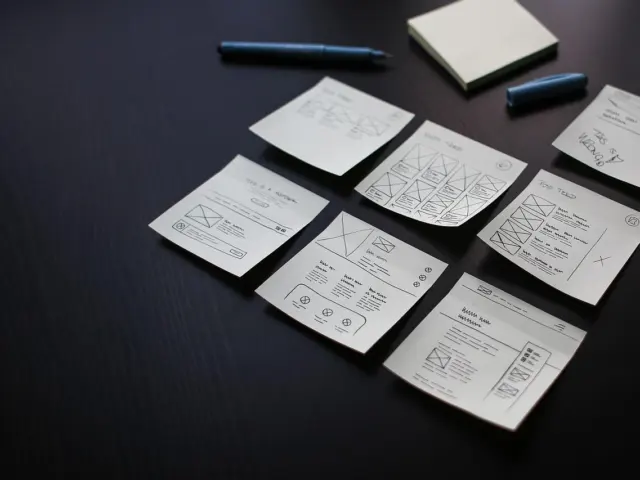
Raising money and wondering what is a pitch deck? It’s a short presentation that lays out your business plan so investors back you or at least keep talking.
This guide sits within the wider topic of ai startups and covers the document founders use to raise money.
| Item | Value |
|---|---|
| Typical investor deck length | 15-24 slides |
| Length suggested in a fundraising guide | 15-20 slides |
| Elevator pitch deck delivery time | 1-2 minutes |
| Story structure used to organise a deck | three-act |
| Major parts in a slide-by-slide structure | four |
| Bullet points to summarise your startup on the first slide | 4-5 |
These figures come from Slidebean’s definition guide and Sellizer’s fundraising guide. They are rules of thumb and can change, so check the sources before you rely on them.
What a pitch deck does for a startup
A pitch deck is a brief, focused presentation designed to give your audience a quick overview of your business, as Slidebean’s definition guide puts it. Its most common use is to win the support of venture capital firms or individual investors.
A typical deck covers these topics:
- Your product or service
- Your business model
- Market potential
- Competitive analysis
- Key metrics about your financial status
- Team information
Decks are not only for fundraising. They also turn up in networking meetings and demo days, and most U.S. accelerator programs require a slide deck during the initial screening, according to the same guide.
The deck has two main purposes. It gives investors an overview so they can assess the opportunity, and it helps you articulate the key aspects of your startup and compile essential information about your business, per Slidebean.
The story arc investors expect
A deck should tell your company’s story rather than read like another business presentation. The Slidebean guide says the story should answer these questions:
- What market opportunity have you identified?
- What have you created to address it?
- How does it work, and who is it for?
- How much have you grown, and what is your growth potential?
- Why are you and your team the right ones to change the status quo?
To give that story shape, the same guide suggests taking inspiration from the three-act story structure.
- First act: the cover slide and the status quo, meaning the current landscape and what isn’t working. Then you introduce your solution as the hero of the story.
- Second act: the size of the market, how the target market responds and the competitive landscape.
- Third act: the founding team, your competitive advantages or rollout strategy, and a clear outline of your funding needs and how the capital will be allocated.
Treat this as a flow from broad to detailed. The guide adds that the structure is not a hard rule, because every company adapts the slides to its own story.
Slide by slide: what goes in each slide
Sellizer’s guide divides a deck into four major parts: the company, the opportunity, the means and the needs. Investors are used to this order, so sticking to it makes your story easier to follow and follow-up questions easier to answer.

The company
- Overview. Many presentations start with a bland cover of just the company’s logo. Sellizer suggests the first slide already carries useful information, such as the problem you solve and your traction, summarised in 4-5 bullet points.
- Mission. Describe your mission or vision briefly.
- Team. Show pictures, job titles and a summary of each member’s experience. Sellizer says the team determines the outcome of an investor pitch more often than you’d think.
The opportunity
- Problem. Name the problem and go deeper than a label: explain the customers’ needs and why the problem matters.
- Solution. Describe how your product or service solves that problem.
- Market. Define the market you’re in, its size in dollars and the portion you will address. Graphs help convey this.
- Product. Emphasise key features, what makes it different from other solutions and why customers care, plus milestones so far and your development plans.
- Customers. Include the logos of early customers, or partners if you aren’t selling to companies. If you have nothing to share yet, skip it.
The same Sellizer guide illustrates these slides with a product presentation from Airbnb’s pitch deck and a revenue model slide from BuzzFeed’s pitch deck, which shows how real decks handle them.
The means
- Technology. Cover patents, trademarks and other intellectual property rights that competitors will find difficult to replicate.
- Competition. Name the companies that compete with you directly and state your advantage over them.
- Traction. Early signals such as website traffic or sales, partnerships, press coverage and testimonials add credibility.
- Business model. Explain how you make money and acquire customers, including pricing models, acquisition costs and the long-term value of a customer.
- Marketing plan. Outline channels, early successes and PR.
If you are still choosing how your company will earn revenue, the guide to ai startup business models covers that decision in more depth.
The needs
- Financials. Sellizer says to calculate your burn rate, the rate at which you will spend the initial capital. Include a realistic sales forecast, a profit and loss statement and a cash flow forecast.
- The ask. State your funding needs and how the capital will be allocated, as the Slidebean guide describes.
Presentation quality matters too. Sellizer notes that the quality of graphics matters more than ever, so plan product screenshots, photos and charts to support the text.
How the deck changes by stage and audience
The Slidebean guide says early-stage startups, which may lack significant traction, typically emphasise problem-solution fit, market potential and being first to market. More mature companies tend to focus on traction, KPIs, unit economics and how additional funding can accelerate growth.
The audience and setting matter as well. The same guide says a deck can be emailed to secure meetings, presented in person or used as a discussion tool, and it lists an elevator pitch deck designed to deliver a pitch in 1-2 minutes.
Slide count is flexible. One author on Slidebean’s overview page argues that if your story takes 25 slides to cover, that is fine, and if you can do it in 10 without leaving anything out, that is better.
Does your company really need a pitch deck?
Not every business needs one. Slidebean says that only a handful of companies are venture-fundable, and that these are fast-growth, massively scalable companies that can and must raise capital to expand.
If you are still working out whether you are building that kind of company, how to start an ai startup walks through the early decisions that come before any fundraising.
Frequently asked questions
How many slides should a pitch deck have?
Show answer
A deck for investors is normally 15-24 slides long, according to Slidebean, while Sellizer frames it as 15-20 slides. Treat both as hints rather than rules.
Who is a pitch deck for?
Show answer
Mainly venture capital firms and individual investors. Accelerators also use decks in their initial screening, and founders use them at demo days and in networking meetings, per Slidebean.
What should the first slide contain?
Show answer
More than a logo. Sellizer notes that many decks open with a bland cover and suggests including the problem you solve and your traction so far.
Can you use one deck for every meeting?
Show answer
You can reuse the core, but adjust the narrative to the scenario. Slidebean describes different scenarios, such as an elevator pitch or an emailed deck, rather than entirely different decks.